



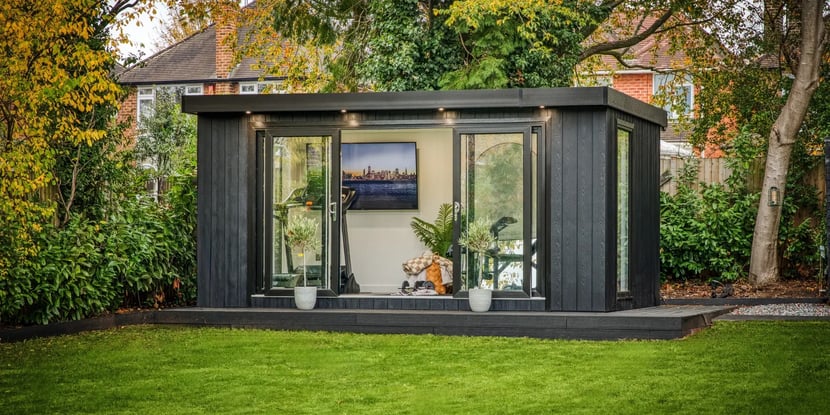
The best way to design a garden gym is to plan it around how you train and the equipment you need. While weight training calls for a strong floor and enough headroom for lifting, yoga benefits from plenty of natural light and a calm environment.
With 20+ years of experience in designing and installing garden gyms, we’ve put together 20 garden gym ideas covering different training and fitness styles, ways to make the most of smaller gardens, practical design essentials and finishing touches to make the space your own. If you’re looking for home gym ideas, explore our garden gyms for inspiration, or read our garden gym guide for advice.
Garden gym ideas at a glance
|
Training style |
What the space needs most |
Ideas |
|---|---|---|
|
Strength |
A solid, level floor and base, extra ceiling height for overhead lifts |
1, 12 |
|
Cardio and HIIT |
Open floor space, good airflow, cooling |
2, 13 |
|
Yoga and Pilates |
Natural light, calm finishes, room to lie flat |
3, 14 |
|
Boxing and MMA |
Fixings strong enough for a heavy bag, mats |
4 |
|
Cycling |
A screen, a fan, power points |
5, 18 |
Garden gym ideas by training style
1. A strength training garden gym
You'll need space for racks, a lifting platform and free weights, as well as a suitable base and foundations to support the weight of your equipment.
Ceiling height is another important consideration, particularly if you plan to lift overhead. We can design our garden gyms with a taller-than-average ceiling height to provide the headroom you require.
Rubber flooring can also help protect the floor from dropped weights and provide a more suitable surface for training.
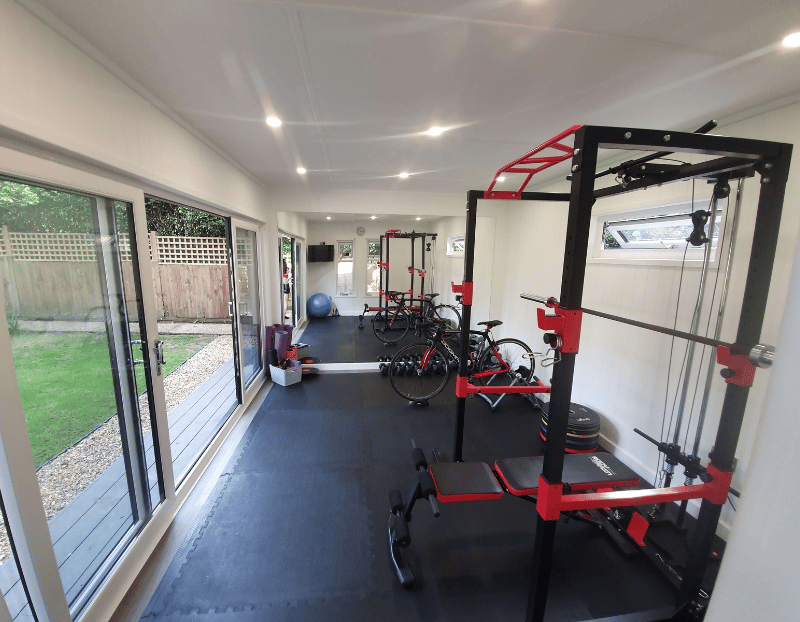
2. A cardio and HIIT garden gym
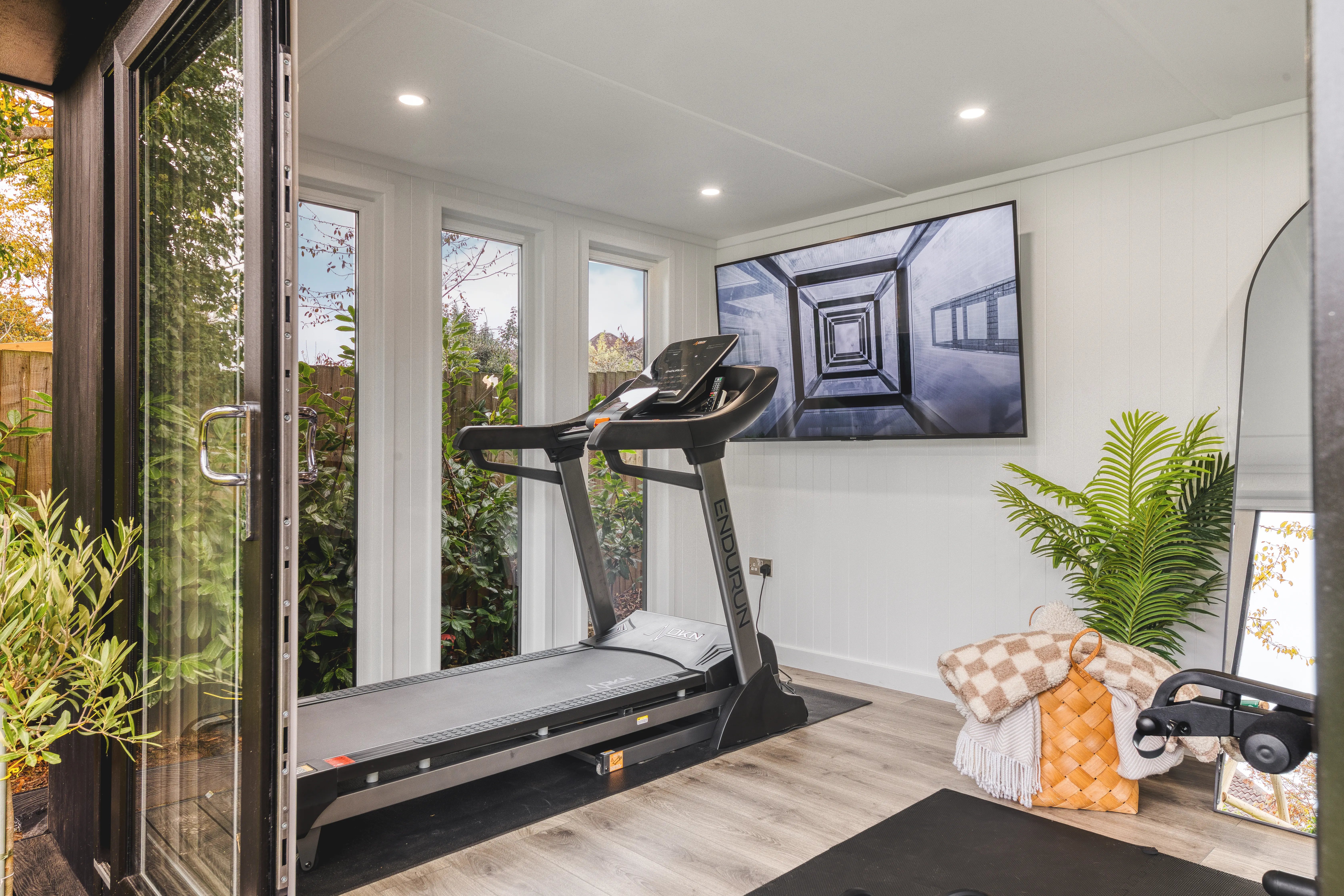
Plan enough space for a treadmill, rowing machine and/or an exercise bike, as well as open floor space for circuits and mat exercises. You’ll be building up sweat and moisture fast, so be sure to consider proper airflow in the design.
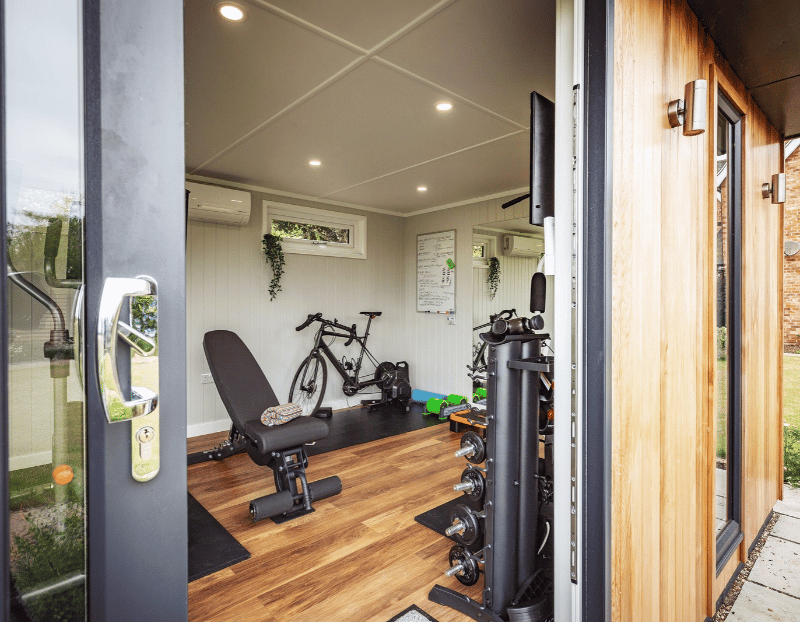
3. A yoga and Pilates studio
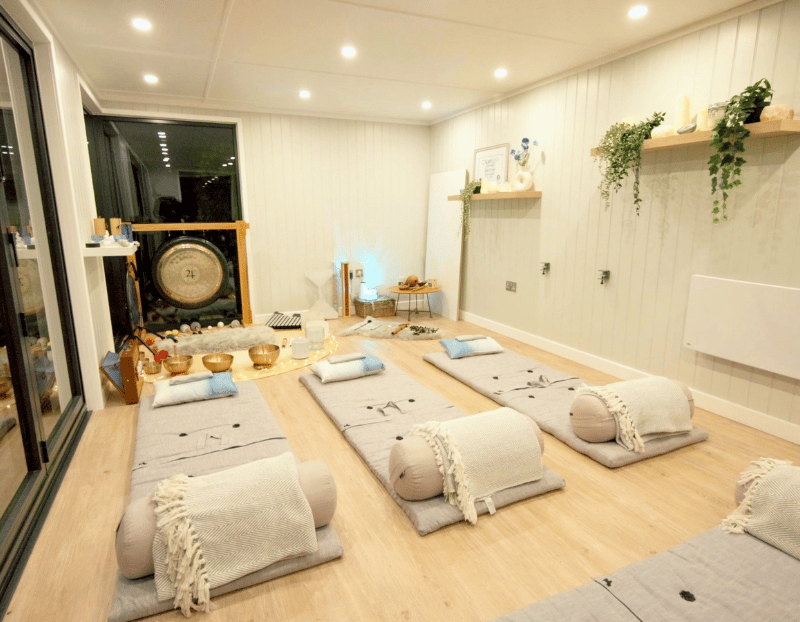
For a yoga studio, opt for a calming colour palette and large glass doors and windows to bring in natural light and relaxing views of your garden. Make sure there's enough floor space to lie flat on your mat, with room to extend your arms and move freely through different positions. If you use a Pilates reformer, allow enough space for the machine and to move comfortably.
4. A boxing and MMA garden gym
Plan for your equipment from the outset. A punching bag will require a secure fixing that can support its weight, and the mounting point should be incorporated into the design before building the gym. Allow enough clear floor space around the bag and fit training mats for a practical surface.

5. A cycling studio
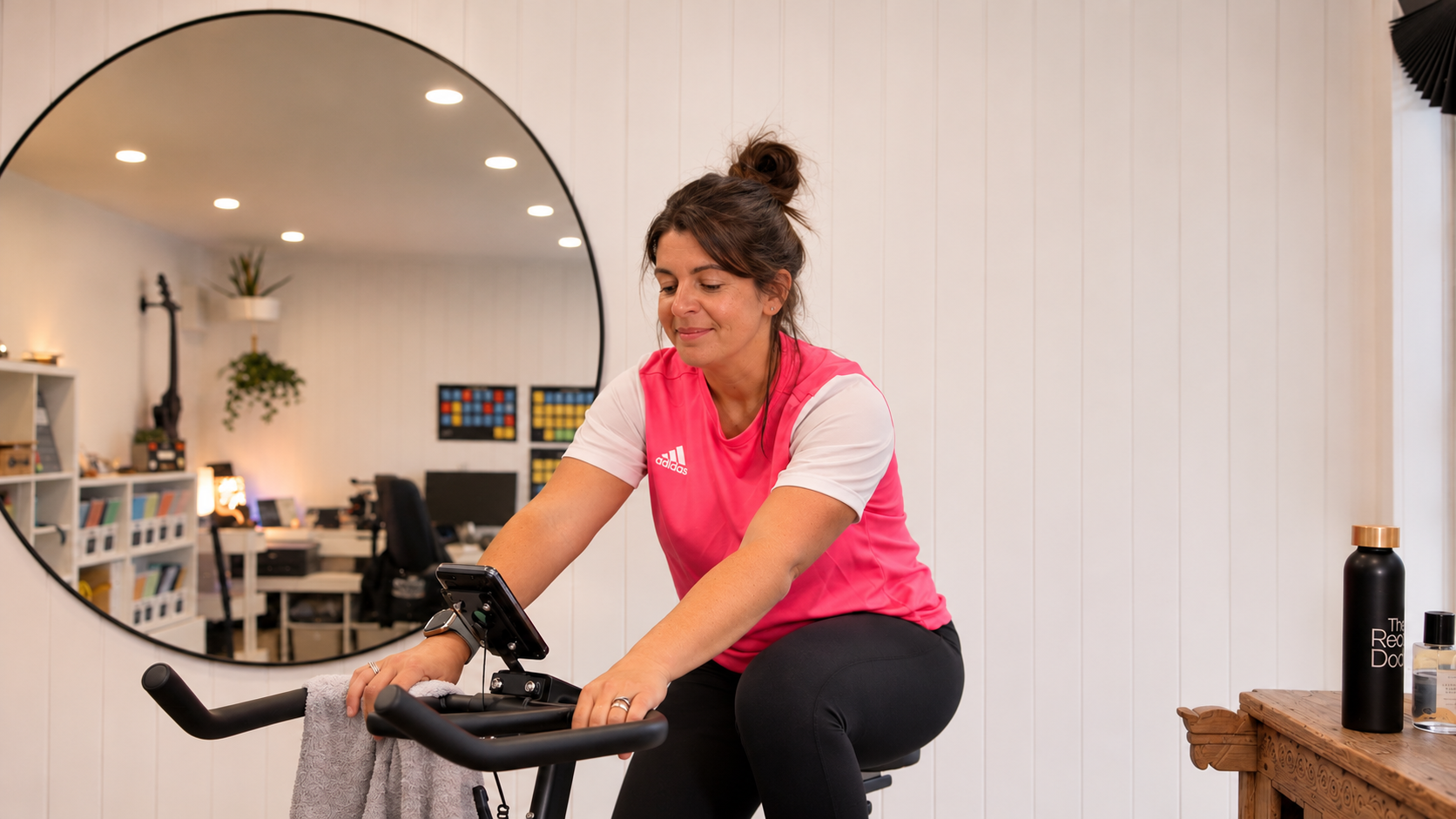
Design around your bike and smart trainer. Consider positioning a screen in front of your bike for virtual rides, and implementing air source climate control for comfortable cycling sessions. Don’t forget to plan enough power points close by.
6. A home office gym
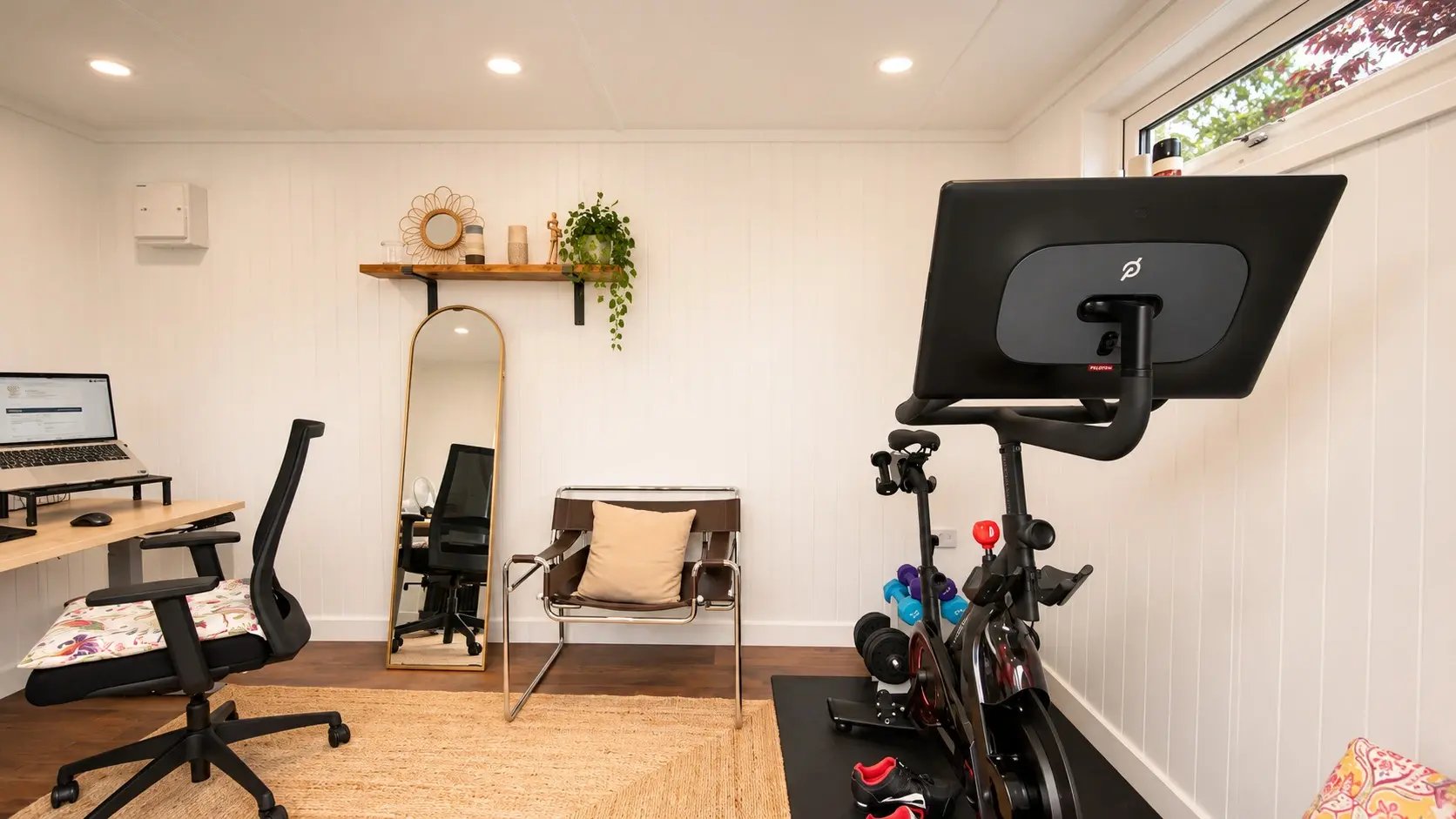
If you plan to work from home as well as work out, you could combine a desk and fitness area in one building. Plan the layout so the desk and gym equipment have their own space, without getting in each other's way. See our garden offices for more ideas.

Small garden gym ideas
7. Choose compact, multi-use equipment
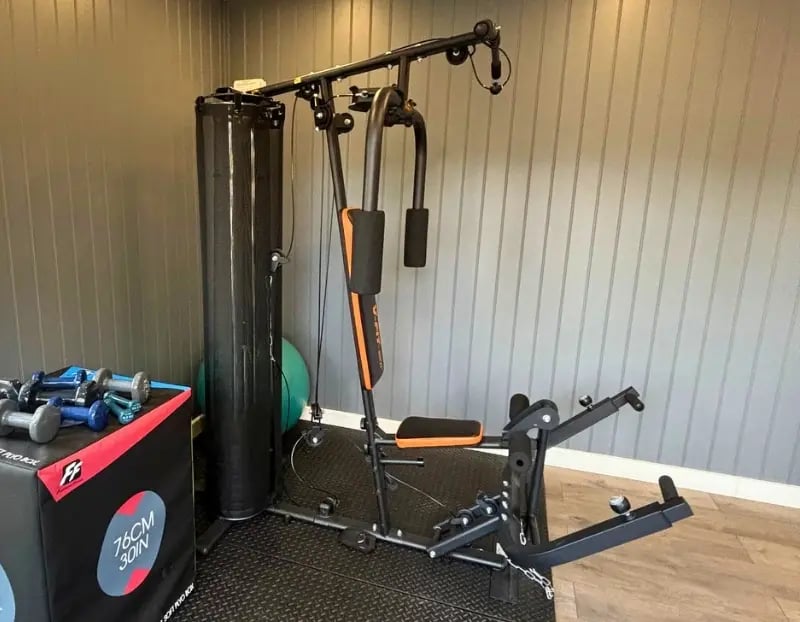
Where space is limited, choose equipment that serves more than just one purpose, such as adjustable dumbbells rather than a full rack of fixed-weight dumbbells. You could also consider a compact cable pulley system, which allows you to perform several different strength exercises using one piece of kit.
8. Put storage on the walls
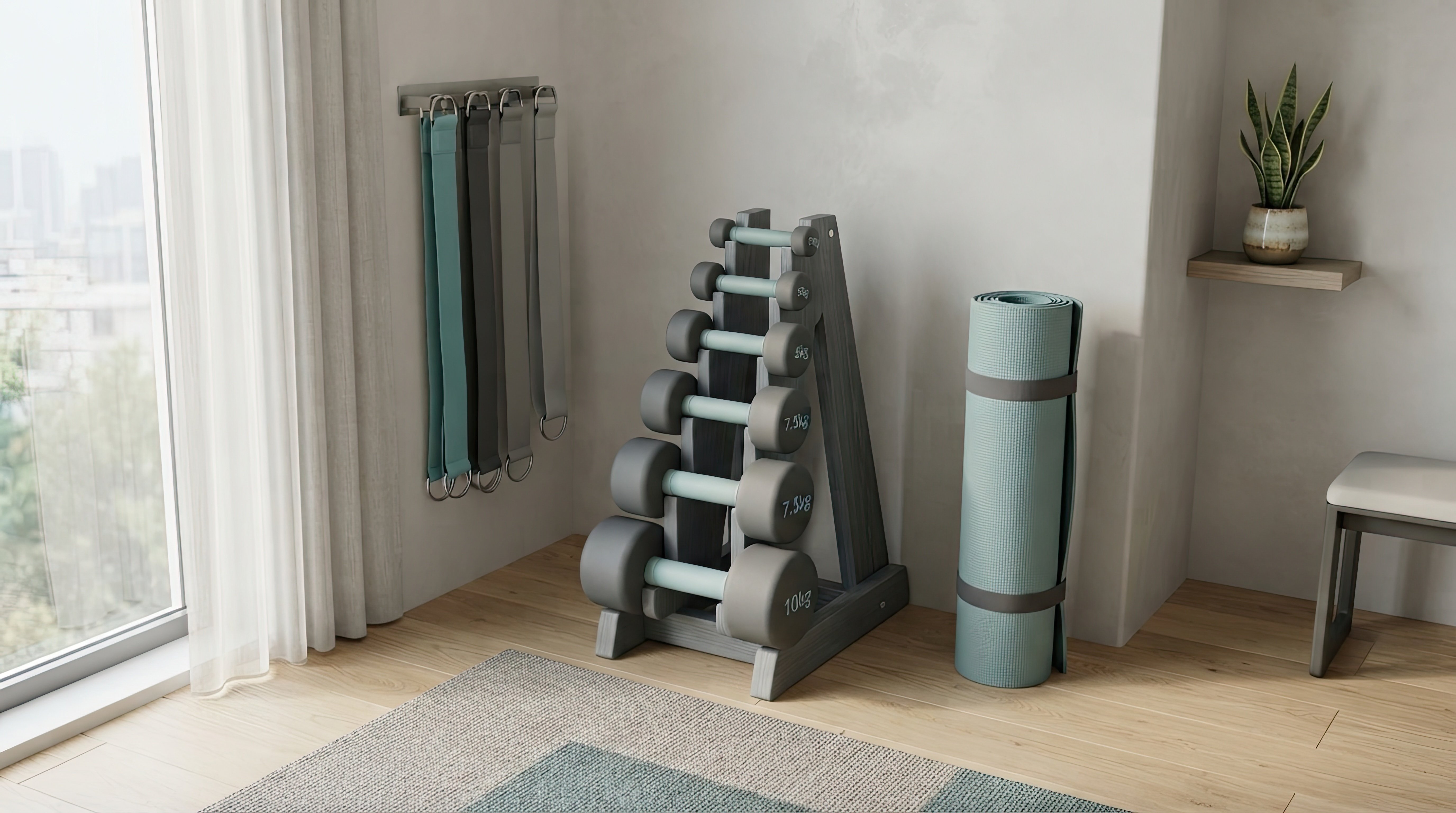
To maintain valuable floor space in a smaller garden gym, add wall-mounted storage racks or hooks for kit and equipment. Where wall-mounting racks or screens are desired, we can reinforce the wall for you where required.
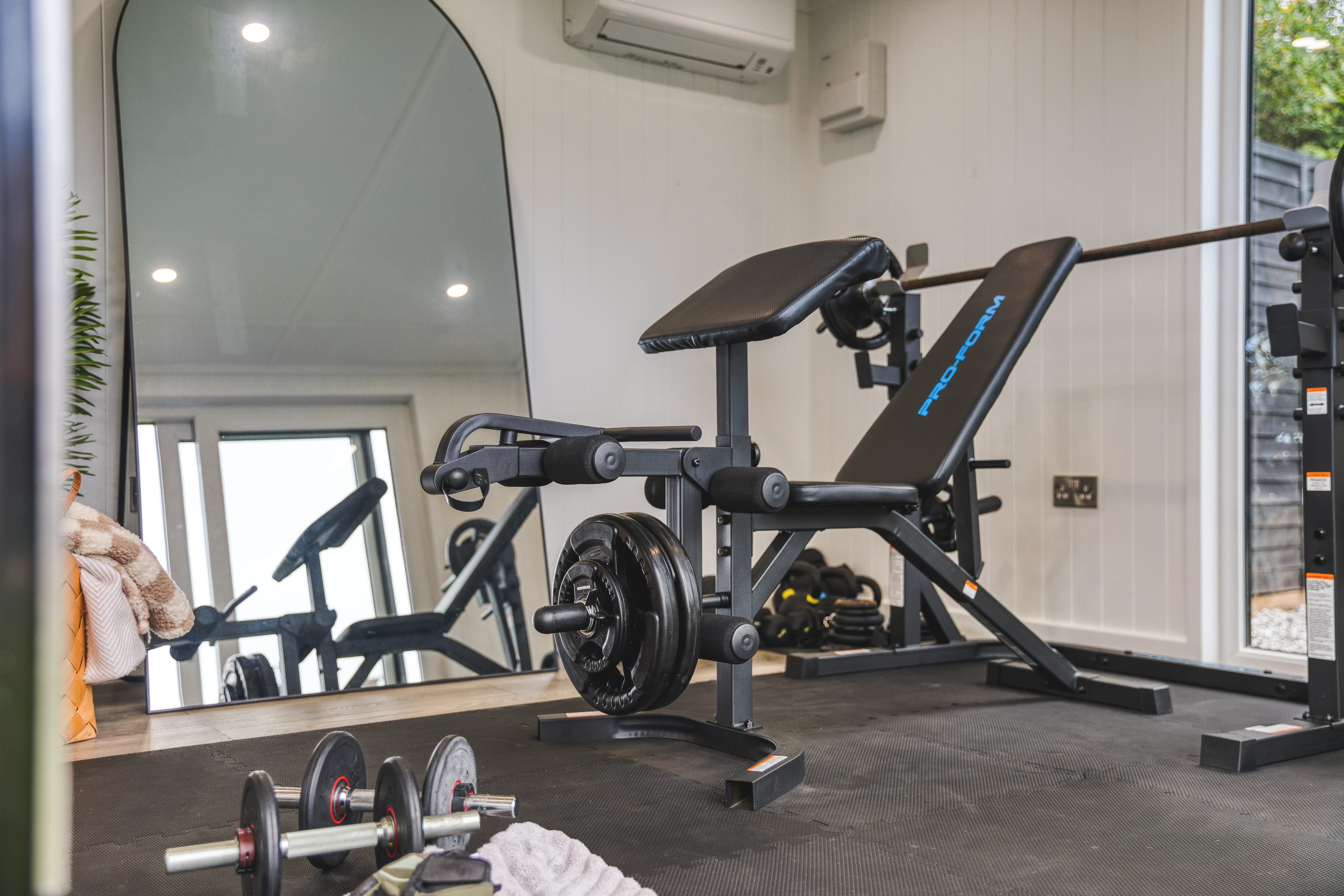
9. Use mirrors to make the room feel bigger
This is a popular technique when making rooms in the house feel bigger, and of course it can be applied to help smaller garden gyms feel bigger too. Plus, while mirrors bounce the light to create the illusion of a larger space, they’re also useful for checking your form throughout your practice too.
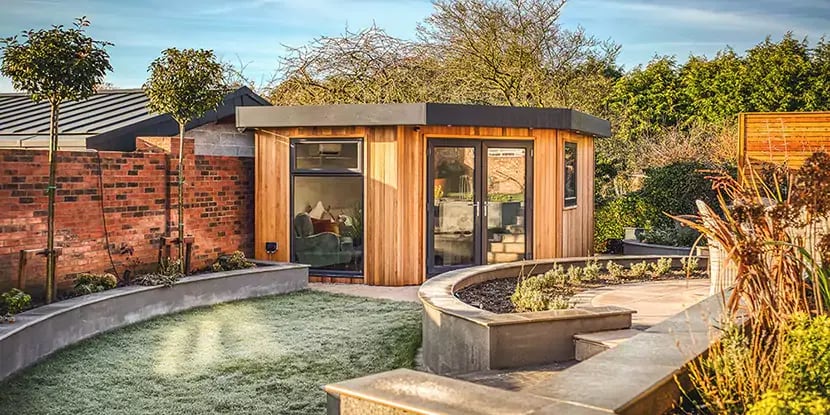
10. Use a corner of the garden
If your garden has an awkward layout or lacks space, a corner garden gym can make the most of a corner of your plot which may otherwise go unused. Positioning your gym in the corner can also leave more of your garden open rather than dominating your outdoor space. Explore this corner garden room case study for ideas.
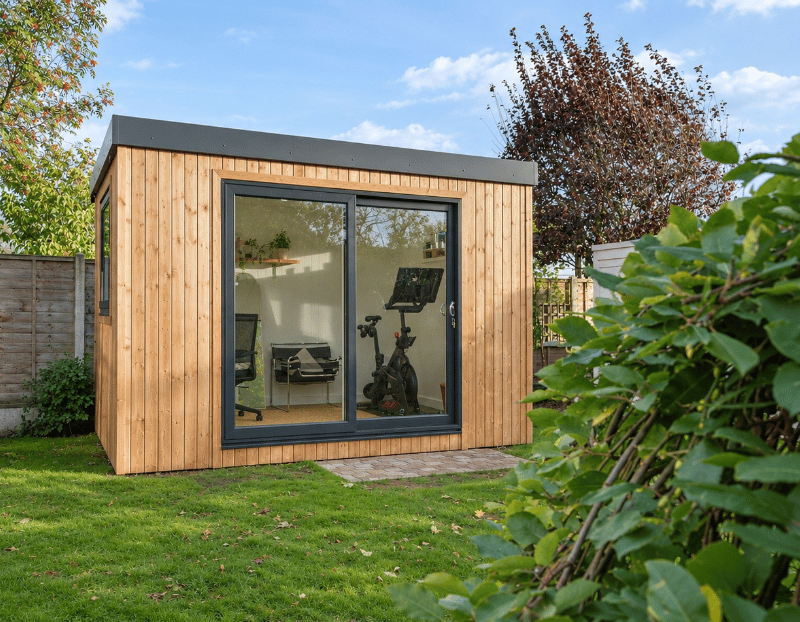
11. Build a micro gym around one discipline
You don't need to fit every type of equipment into a small home gym. Where space is particularly tight, focus on the training you do most often and choose a few pieces of equipment to suit that routine. This way, you can create a micro gym focused on one style of fitness.

Flooring, ventilation, lighting and storage
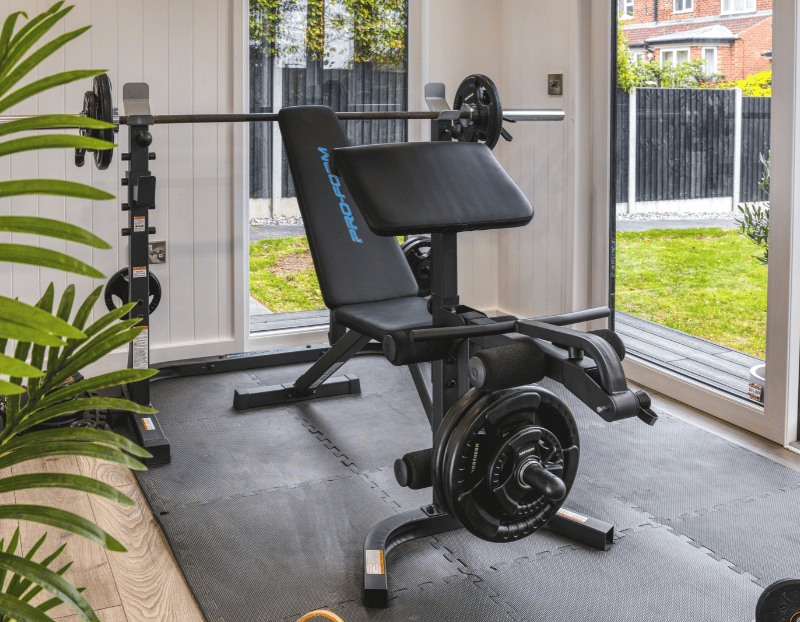
12. Rubber gym flooring
Adding rubber mats will help to protect your gym flooring from heavy equipment, scratches from dropped weights, and general wear and tear. They can also help to absorb vibration and noise created during your workouts.
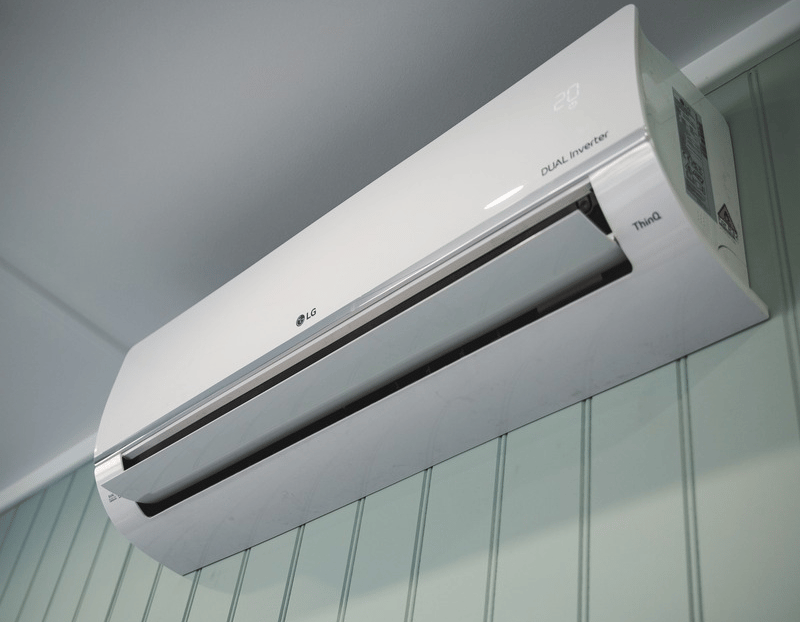
13. Ventilation and air conditioning
Avoid a stuffy, sweaty home gym by opening windows to maintain airflow or adding an air source climate control unit to help keep the room comfortable during cardio or hard sessions. Read our guide to find out everything you need to know about running electricity to your garden room.
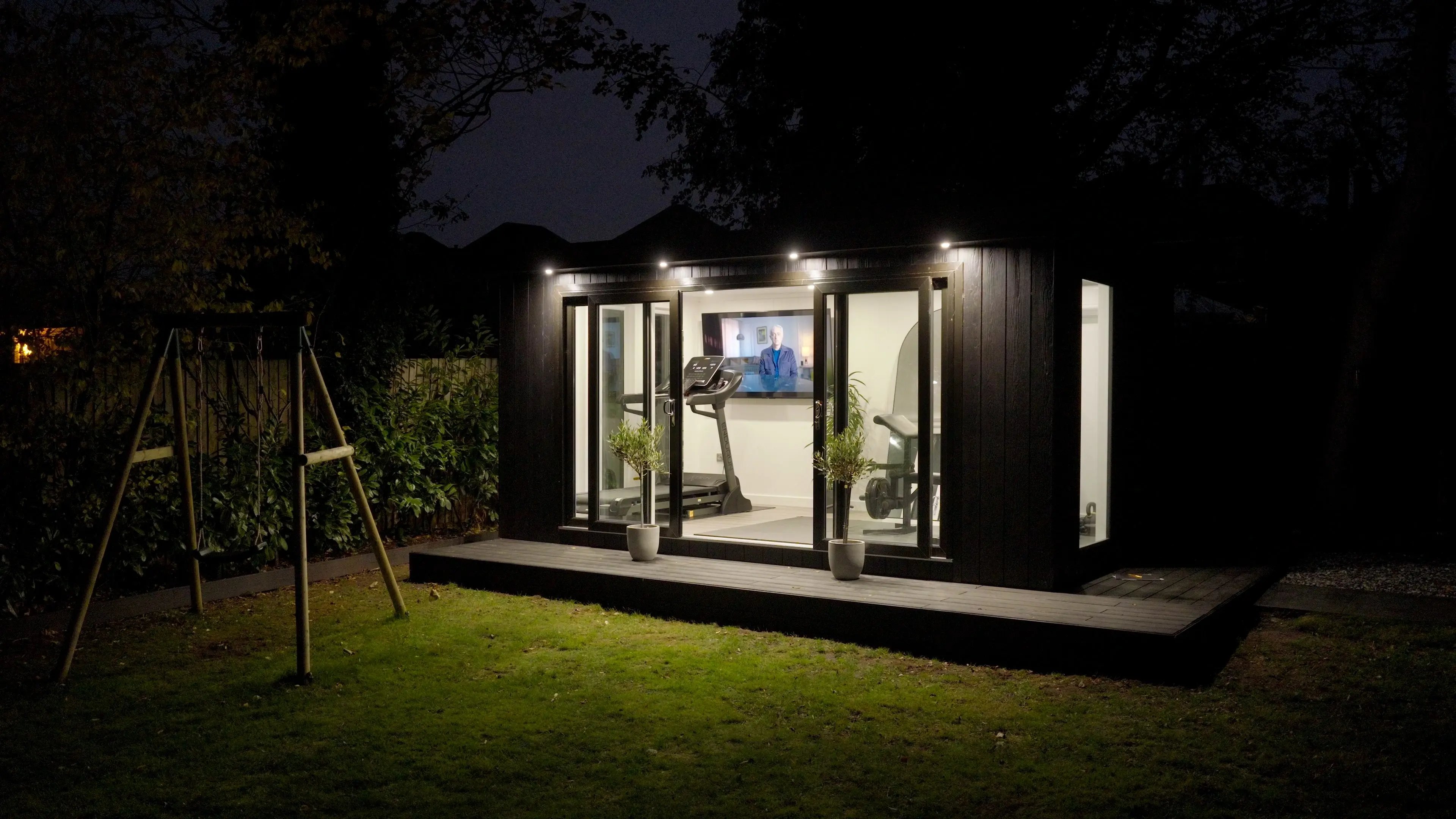
14. Lighting
Natural light makes a garden gym feel brighter during the day, so consider the position and size of your windows (and/or glass doors) when planning the layout. As for early morning workouts or darker winter evenings, you’ll need good artificial lighting. Integrated ceiling spotlights provide an even illumination and keep your gym usable through all hours, all year.
15. Built-in storage for heavy kit
Planning storage for your equipment is essential. Storage walls are a practical option for equipment you want to use every session, but if you need extra room to keep equipment out the way, consider an attached storage room when designing your garden building.
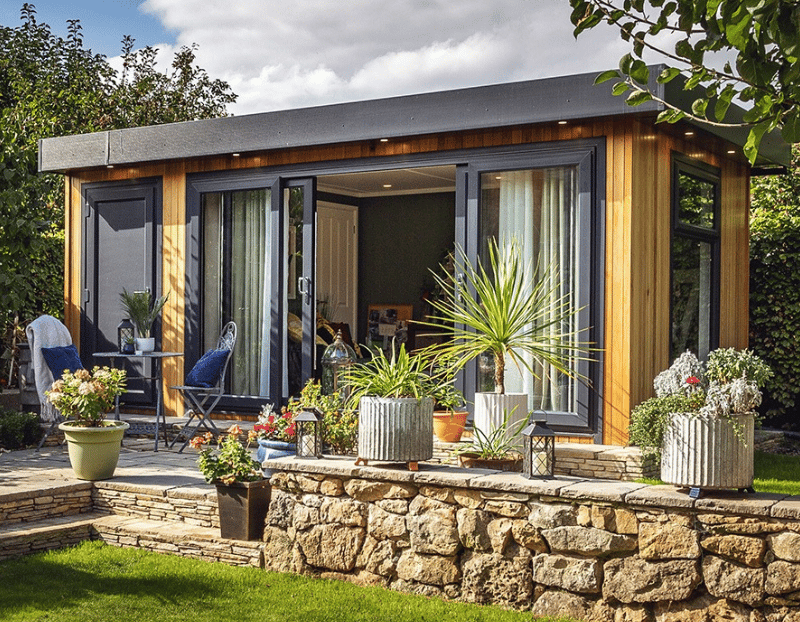
16. Insulation for year-round training
Ensuring your gym is insulated is key for creating a workout space you can use throughout the entire year, from keeping you warm enough during the harsh cold of January to keeping you cool in the heat of July.

Finishing touches for your garden gym
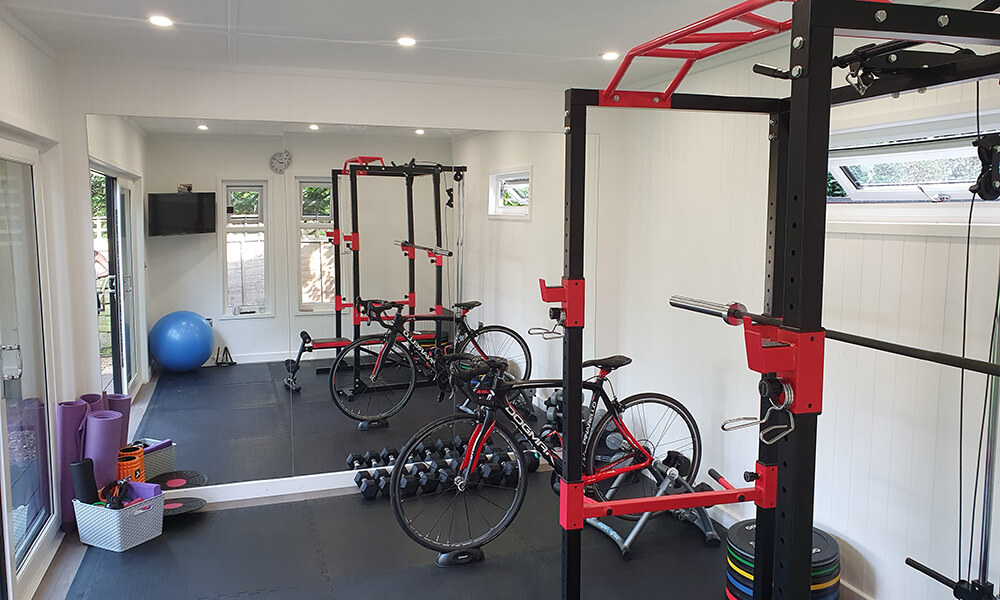
17. A mirrored wall
Customising your garden gym with a full mirrored wall is useful for checking your form and technique during sessions like weight training or yoga.
18. A screen for online classes
For following online yoga classes, watching workout videos on YouTube or participating in virtual training sessions, you can add a wall-mounted TV or projector. For this, you’ll need a reliable Wi-Fi connection.
19. Hooks and racks for smaller kit
Finishing off your garden gym with wall-mounted hooks or racks are an easy way to keep smaller pieces of equipment (such as resistance bands or skipping ropes) organised and off the floor.
20. Bi-fold doors for outdoor training
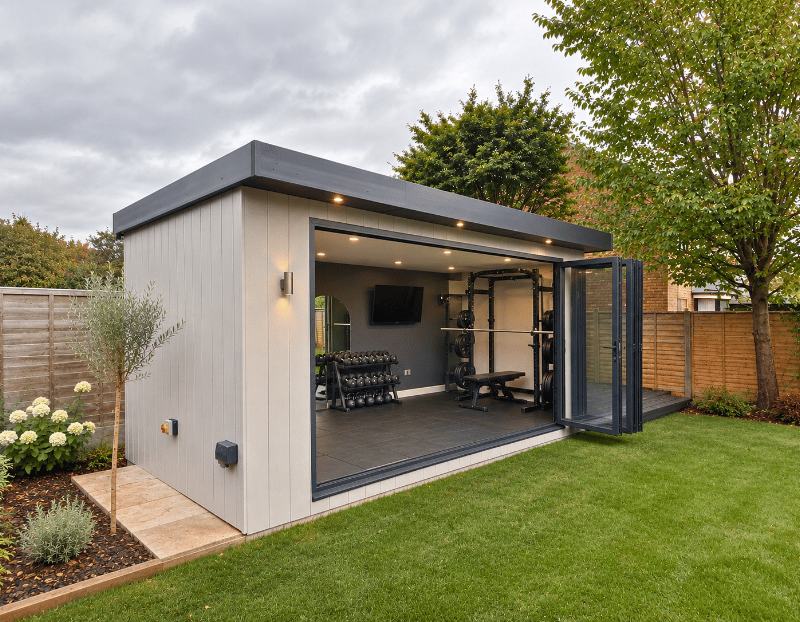
Last but not least, one of our favourite outdoor gym ideas is to opt for a garden gym with bi-fold doors. This will allow you to open out the whole front of your gym to train in the fresh air or add outdoor circuits into your routine seamlessly.

Real Cabin Master garden gyms
Laura and Tom wanted a space of their own to work out at home. Now they have a dedicated home gym at the bottom of their garden, and they're saving money on subscriptions and travel time, making their fitness goals easier to achieve!
Laura & Tom’s outdoor garden gym
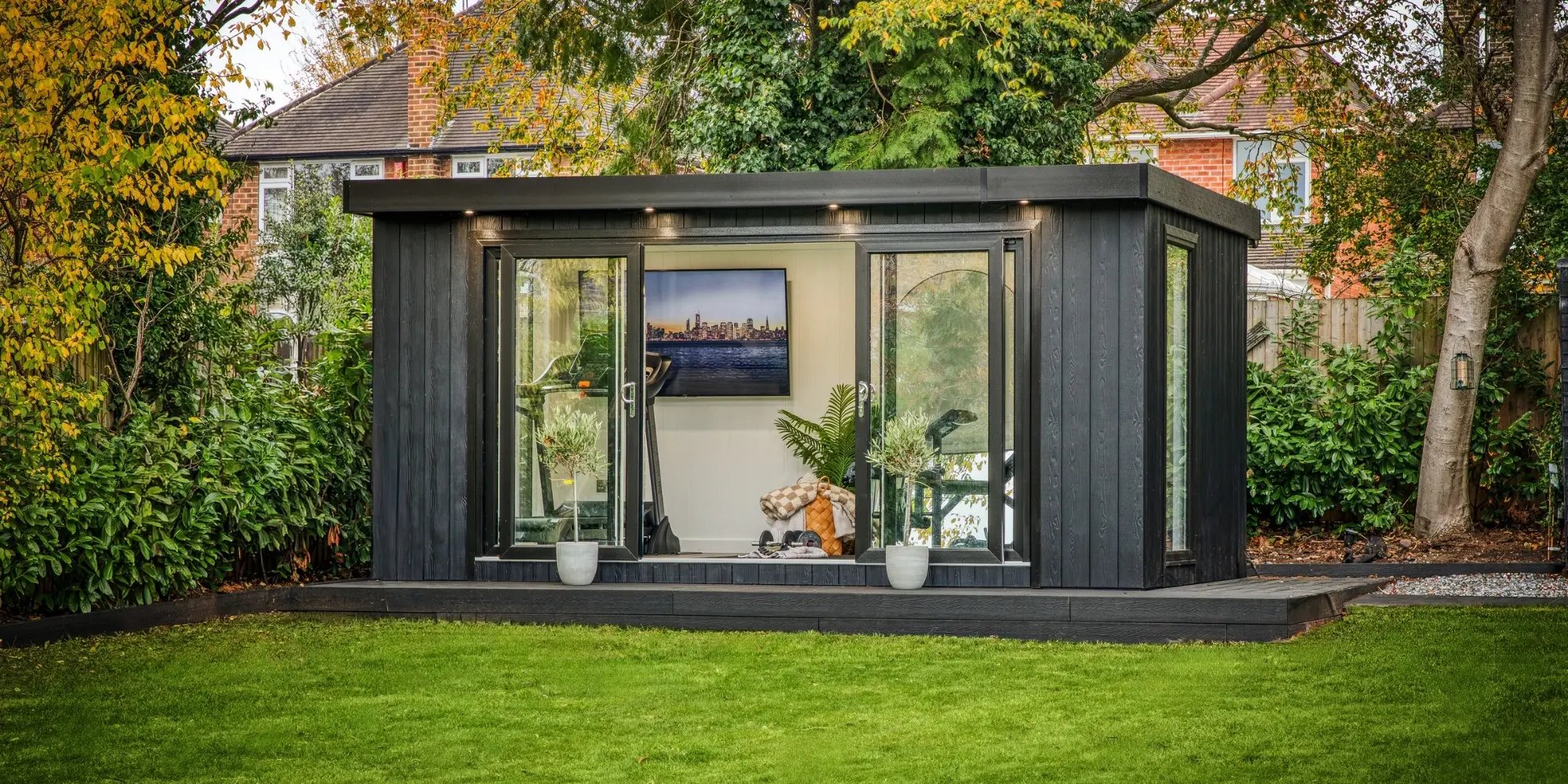
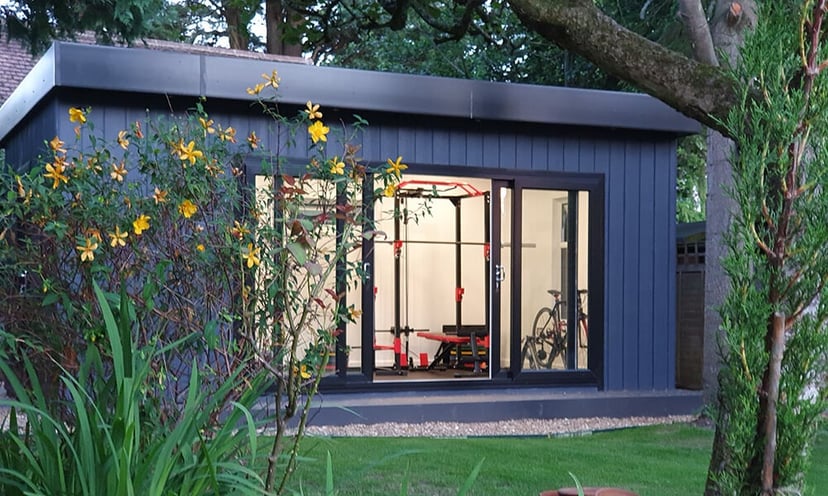
We designed and installed a 5m x 3.5m garden gym with large glass frontage to bring in the views of Tim’s garden.
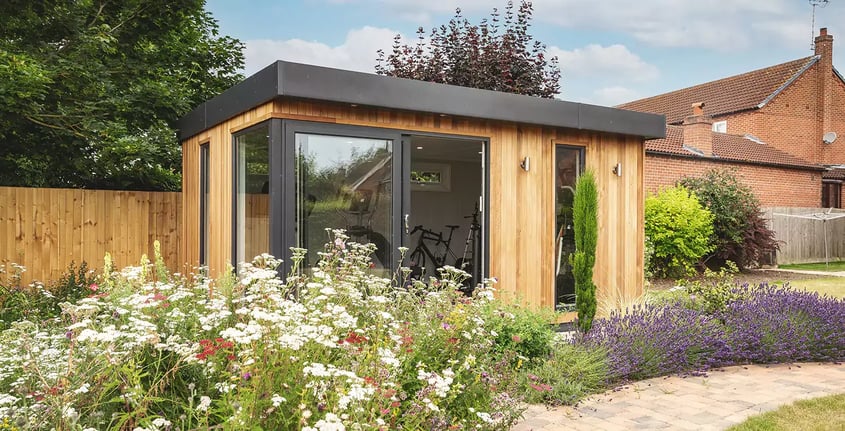
Alan required extra overhead clearance and so we designed and installed his 6m x 3.5m garden gym with a taller than average internal ceiling height to provide extra headroom.
Ready to plan your own? Explore our garden gyms or book a free design consultation.
Garden gym FAQs
How do you make a gym in your garden?
Start by deciding how you plan to use your outdoor gym and selecting a size that gives you enough room for your equipment and training style. Then, consider the practical details, including the base, flooring, power, lighting and airflow. Explore our garden gym options.
Do I need planning permission for a garden gym?
Most garden gyms don't need planning permission, because they typically fall under permitted development. That applies as long as the building is single storey, no more than 2.5m high if it's within 2m of a boundary, isn't in front of your house and, together with other outbuildings, doesn't cover more than half your garden.
What is the best flooring for a garden gym?
Your garden gym should have a solid, level base. You’ll want quality flooring installed and preferably to add your own rubber gym flooring or exercise mats on top for extra protection.
What size garden gym do I need?
The size garden gym you need depends on your training style. While a yoga studio for one could be compact, a strength training gym will need space around your weight rack, as well as enough headroom.
How much does a garden gym cost in the UK?
The cost of a garden gym in the UK depends on factors such as the size, insulation, and your chosen fit-out. Visit our garden gyms page to learn more about our bespoke home gyms and request a quote.
Is an outdoor gym a good idea?
Yes, an outdoor gym is a good idea providing it is insulated so it can be used all year. It can be very beneficial to have a gym at home to remove the time and effort it takes to travel to a public gym, and you can save money on a gym membership each month too.

